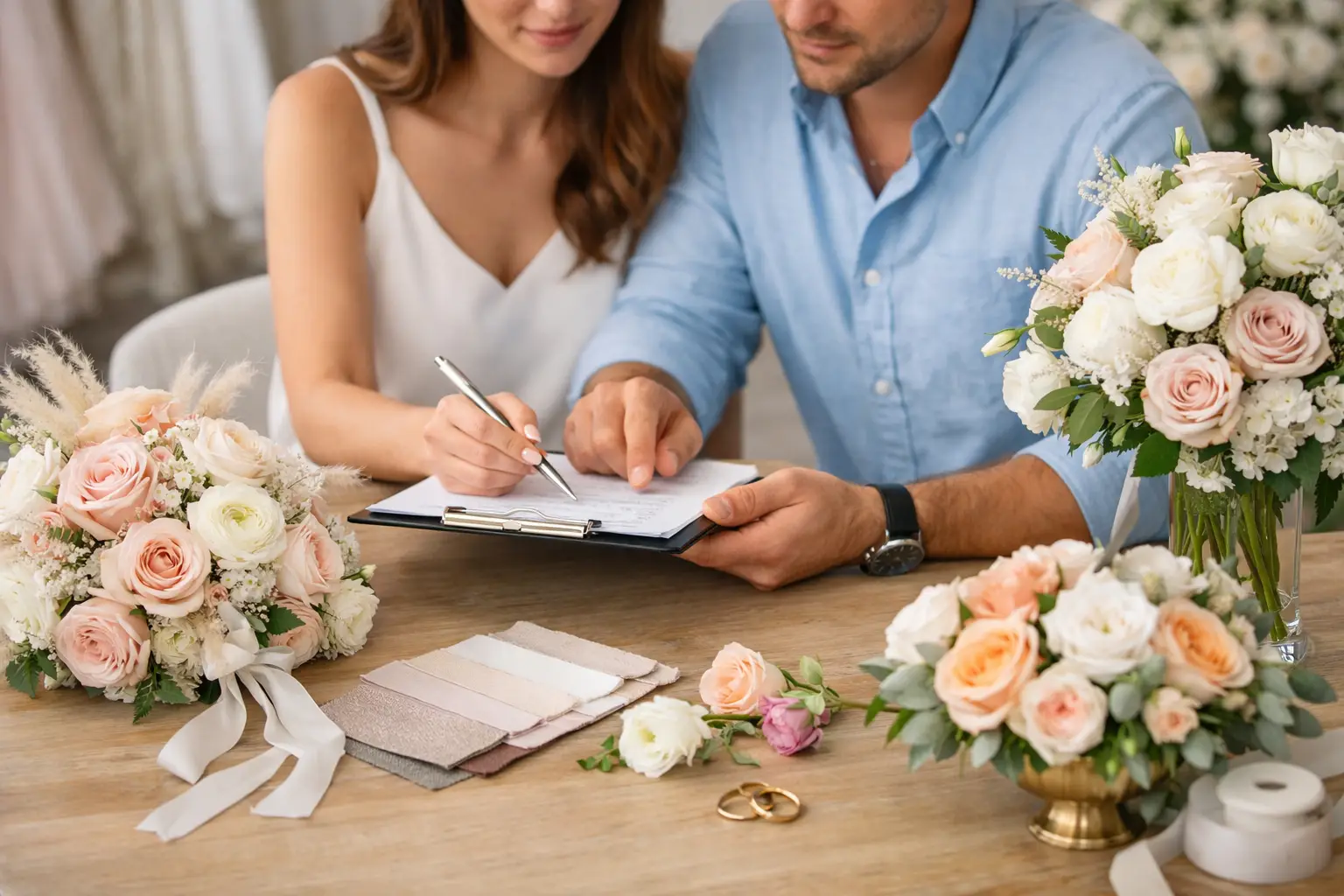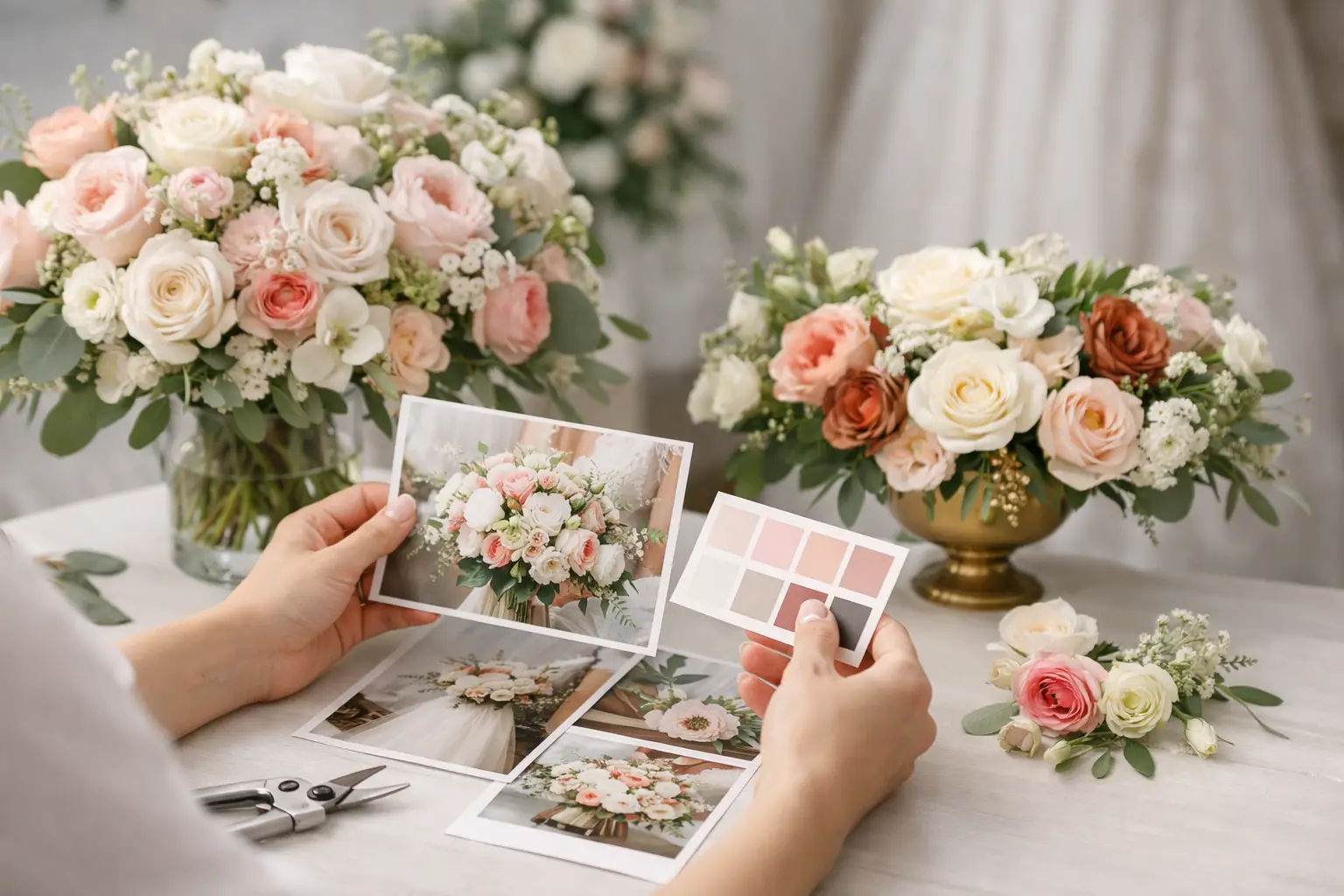
The flowers usually become real the moment you start picturing the bouquet in your hands, the ceremony aisle, and the tables your guests will actually sit around. That is why so many couples ask how to choose wedding flowers after they have a venue and a date, but before they feel fully sure of their style. It is one of the most personal parts of wedding planning, and one of the easiest places to feel overwhelmed if every option starts looking good.
The good news is you do not need to know every bloom by name to make smart floral decisions. You just need a clear sense of what matters most to you, where you want the flowers to do the heavy lifting, and what trade-offs fit your budget.
Start with the feeling, not the flower names
Before you talk about roses, ranunculus, orchids, or hydrangeas, think about the overall feeling you want your wedding to have. Soft and romantic feels different from modern and structured. Garden-inspired feels different from classic black-tie. Bright and playful tells a different story than neutral and elegant.
This matters because floral choices are not only about color. Shape, movement, texture, and size all change the mood of a space. A bouquet filled with airy greenery and loose blooms feels relaxed. A compact bouquet with tightly layered flowers feels more formal. Tall centerpieces create drama, while lower arrangements often feel warmer and more conversational.
If you are not sure how to describe your style, start with a few simple words. Try something like timeless, natural, colorful, understated, or dramatic. Those words give your florist a stronger direction than a list of random flower varieties saved from social media.
How to choose wedding flowers for your budget
Budget shapes floral design more than most couples expect, and that is not a bad thing. In fact, a realistic budget often makes decisions easier because it helps you focus on the pieces that will have the biggest visual impact.
When couples ask how to choose wedding flowers, one of the first questions should be where flowers matter most. For some, it is the bridal bouquet and ceremony backdrop because those show up in nearly every photo. For others, reception centerpieces are the priority because that is where guests spend the most time.
A practical approach is to choose two or three focal areas and invest there. Then keep the remaining floral pieces simpler. For example, you might prioritize the bridal bouquet, ceremony installation, and head table, while using more modest centerpieces elsewhere. Or you may choose lush reception flowers and keep personal flowers more streamlined.
There are always trade-offs. Premium blooms, large installations, and out-of-season flowers can raise the total quickly. Repurposing ceremony flowers at the reception can help stretch your investment without making the design feel sparse.
Let the season work for you
Seasonal flowers tend to offer a better mix of freshness, availability, and value. They also tend to look more natural in your wedding setting because they reflect what is thriving at that time of year.
Spring weddings often lean into tulips, garden roses, peonies, and sweet romantic textures. Summer can support brighter palettes and fuller arrangements, though heat is something to consider for outdoor events. Fall works beautifully with richer tones, textured greenery, and flowers that add warmth. Winter weddings often look stunning with elegant whites, deep reds, or moody jewel tones.
This does not mean you have to pick only what is local or in peak season. It does mean flexibility usually helps. If you love the look of a certain flower but it is costly or harder to source for your date, your florist can often suggest a bloom with a similar shape or feel. That kind of substitution is often the difference between a beautiful design and an overcomplicated one.
Match the flowers to the venue
Your venue already has a personality. The right flowers should work with it, not compete with it.
A ballroom with high ceilings can handle larger arrangements and more formal floral styling. A garden venue may need less overall floral volume because the setting already provides color and texture. An industrial space often comes to life with softer flowers that add warmth. A chapel ceremony may call for classic arrangements that feel respectful of the space rather than overly trendy.
Scale matters just as much as style. Small arrangements can disappear in a large room, while oversized installations can feel crowded in an intimate venue. This is where professional guidance makes a real difference. Flowers should frame the space, not fight it.
If your wedding is outdoors, ask practical questions early. Some flowers wilt faster in direct sun. Wind can affect candles, arches, and taller designs. Heat can change how long bouquets and boutonnieres look fresh. In Texas, especially during warmer months, flower selection has to account for weather as much as aesthetics.
Choose a color palette that supports the day
Color is often where couples feel the most pressure, but floral color does not have to match every detail exactly. It just needs to feel connected to the overall wedding design.
A useful way to think about color is in layers. Start with your main wedding colors, then consider neutrals, greenery, and accent shades that can soften or deepen the look. For example, blush and white can feel more dimensional with soft peach or beige. A white-and-green palette can shift modern or romantic depending on the flower types and vessel styles.
Bridesmaid dresses, linens, stationery, and the venue itself all affect how flowers read in person. If the room is already colorful, a restrained floral palette may look more polished. If the space is neutral, flowers can carry more of the visual story.
There is also the question of timeless versus trend-driven. Trendy colors can be fun and memorable, but they can also date your photos more quickly. If that does not bother you, go for it. If you want a look that feels classic for years, softer and more balanced palettes often hold up well.
Decide where flowers matter most
Not every floral piece needs the same level of attention. Some are central to the guest experience, while others are nice additions if the budget allows.
Most weddings start with personal flowers, including the bridal bouquet, bridesmaid bouquets, boutonnieres, and corsages if needed. From there, ceremony flowers and reception flowers come into play. Some couples also add floral touches to welcome signs, cake tables, bars, seating charts, or lounge areas.
If you are trying to decide what to keep and what to skip, think about visibility and function. A statement ceremony arrangement may be worth it if it appears in major photos and can later be moved behind the sweetheart table. Meanwhile, smaller decorative extras may not matter as much if guests will barely notice them.
This is where a dependable florist can be especially helpful. At Estrella’s Flower Shop, planning often goes more smoothly when couples focus on the floral pieces that create the strongest effect rather than trying to put flowers absolutely everywhere.
Be honest about maintenance and logistics
Some flowers are delicate. Some arrangements are heavy. Some installations require more setup time than couples expect. Those details are not glamorous, but they matter.
If you want flowers that can move from ceremony to reception, say so early. If your timeline is tight, your florist may recommend designs that are easier to transport and reset. If you are planning an outdoor ceremony in summer, your bouquet and personals may need hardier blooms that hold up better through photos and the event itself.
Scent is another factor couples sometimes overlook. Fragrant flowers can be lovely, but on dining tables they can feel strong in a closed room. Tall centerpieces can be dramatic, but guests still need to see each other across the table. Good wedding flowers are not only beautiful. They function well in real life.
Trust inspiration, but do not copy blindly
Photos are helpful, but they can also create unrealistic expectations. A bouquet from a styled shoot may have been photographed in perfect weather with a much larger budget than a real wedding. Lighting, editing, season, and even flower availability can change the final result.
Bring inspiration, but focus on what you like about it. Maybe it is the shape, the color mix, or the texture rather than the exact flowers. That gives your florist room to design something that suits your date, venue, and budget.
This is often the smartest answer to how to choose wedding flowers: choose a direction, not a rigid script. The best wedding flowers feel personal and well-suited to the day, not copied from someone else’s event.
Work with a florist who asks good questions
A strong florist will do more than quote a price. They should ask about your venue, guest count, timeline, style, priorities, and budget comfort level. They should also be honest when an idea is possible, when it needs adjustment, and when there is a better option that gives you more value.
That kind of conversation saves stress. It also helps you avoid spending too much on flowers that do not add much to the final look. The right floral plan feels thoughtful from every angle, from the bouquet in your hands to the arrangement your guests remember at the end of the night.
Wedding flowers do not need to be the most complicated part of your planning. If you choose with the mood, season, venue, and budget in mind, the right pieces start to stand out quickly. And when the flowers feel like they belong in your day instead of just filling space, that is when they really do their job.